

Teaching English abroad is one of the most exciting ways to travel, build a career and make a real difference to learners. It can also feel overwhelming at first: Which country? Which qualification? What documents? This step-by-step guide to teaching English abroad walks you through the whole process, from requirements to your first weeks in a new country.
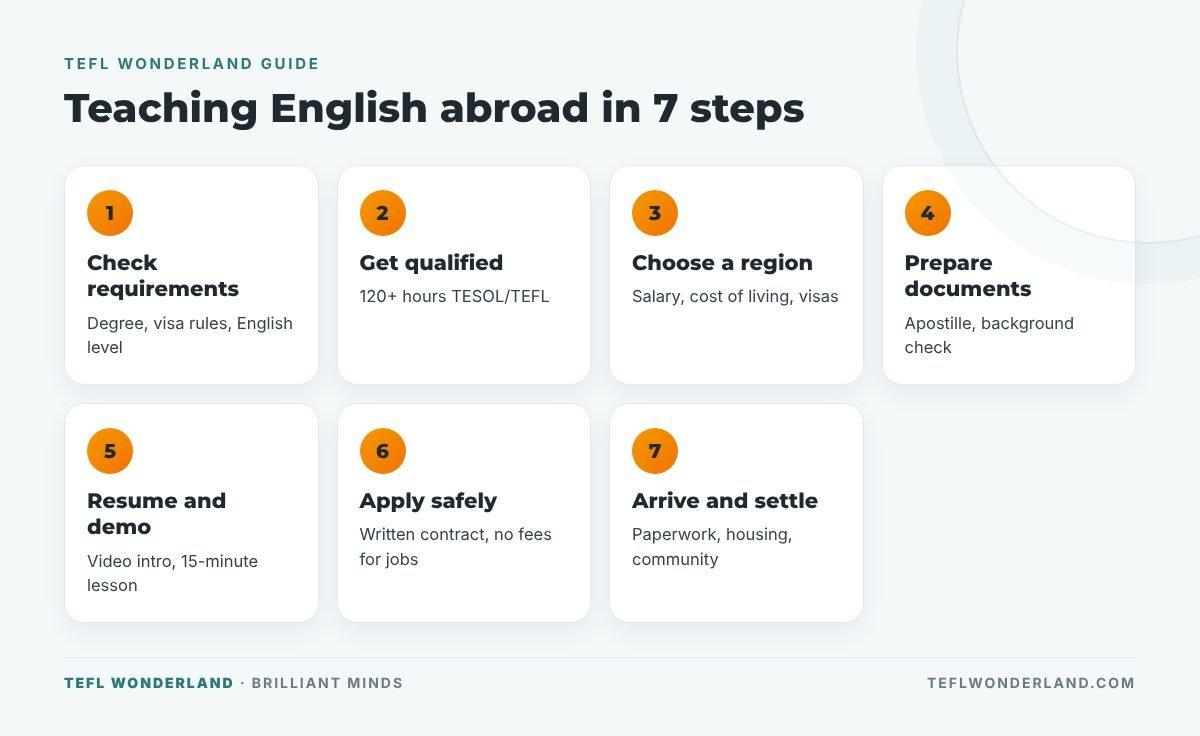
Step 1: Check the requirements for teaching English abroad
Requirements depend on the country and the type of school, but most employers look for:
- A recognized TEFL or TESOL qualification, often at least 120 hours.
- Advanced English, around CEFR C1 or above. Many countries welcome non-native speakers with strong English and a good qualification.
- A clean criminal record check from your home country.
- A valid passport, usually with at least 12 months left.
- A university degree for many work visas. Some countries, such as Cambodia, are more flexible.
Visa rules change, so always check the current requirements on the official government or embassy website of the country you choose, and ask your employer what they will help with.
Step 2: Get qualified
A good qualification helps you get hired and, more importantly, helps you survive your first classes. Look for a course with enough hours, marked assignments and teaching practice. Our TESOL courses are Ofqual-regulated at Level 3 and Level 5, and the Premier versions include 20 hours of Guided Teaching Practice with real students.
Step 3: Choose a region for teaching English abroad
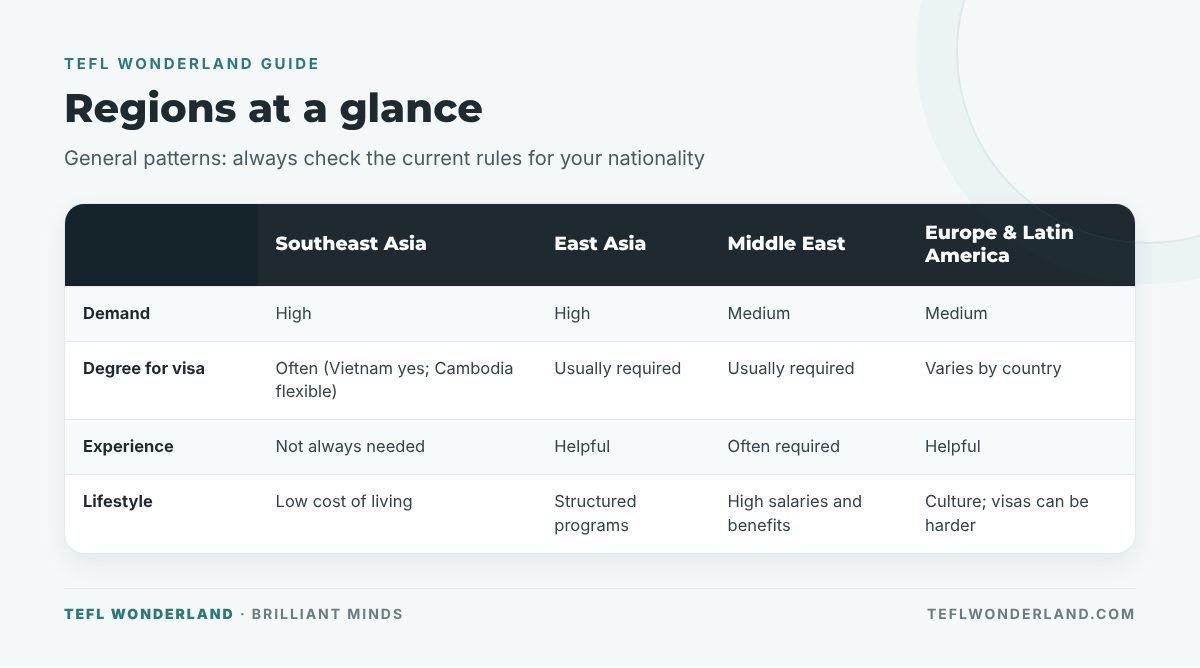
- Southeast Asia (Vietnam, Cambodia, Thailand): high demand, a friendly lifestyle and a relatively low cost of living.
- East Asia (South Korea, Japan, China, Taiwan): structured programs and good salaries, usually with a degree requirement.
- The Middle East (Saudi Arabia, the UAE, Qatar): high salaries and benefits; many roles ask for a degree, a qualification and experience.
- Europe and Latin America: wonderful places to live, but visas can be harder for some nationalities, and many schools hire locally.
Make a short list of two or three countries and compare salary, cost of living, visa rules, working hours, climate and distance from home.
Step 4: Prepare your documents
Start early: some documents take weeks. Depending on the country, you may need:
- your degree and TESOL certificate, often legalized with an apostille;
- a criminal record check, also often apostilled;
- a medical check and passport photos;
- a resume and reference letters.
An apostille is a certificate that lets a public document from one country be accepted in another country that is part of the 1961 Apostille Convention, instead of a longer legalization process (HCCH). For countries outside the convention, embassy legalization is usually needed. Scan everything and keep digital copies.
Step 5: Build a teaching resume and demo lesson
Schools want to see your qualification, any teaching or tutoring experience, and your personality. Prepare:
- a one-page resume focused on teaching, training, coaching or working with children;
- a short, friendly video introduction (one to two minutes);
- a 10 to 15 minute demo lesson with a clear aim, lots of student talking time and a quick review.
Practice with feedback if you can. Our CPD course Teaching Demo Practice and Resume Feedback is designed for exactly this.
Step 6: Apply safely
Apply directly to schools or through reputable recruiters. Be careful:
- A real employer will never ask you to pay for a job offer.
- Ask for a written contract that states salary, working hours, holidays, housing and visa support.
- Speak with a current teacher at the school if possible.
- Check that the school will sponsor the correct work visa, not a tourist visa.
Step 7: Arrive and settle in
Your first weeks are about paperwork, finding a place to live and getting to know your school. Join local teacher groups, learn some of the local language and be patient with yourself. Culture shock is normal and it passes, often after a few weeks or months.
Budgeting for teaching English abroad
Plan for your first month before your first salary arrives: flights, visa and document fees, a deposit for an apartment, local transport and daily living costs. Many teachers aim to arrive with savings equal to two or three months of living costs. Ask your school whether it offers a flight allowance, housing or an advance on salary.
Teaching English abroad with support
If you would like help with the whole process, our Teach Abroad program offers placements in Vietnam and Cambodia. Support includes visa, insurance and vaccination guidance before you leave, accommodation for your first nine days, school introductions, interview preparation and resume help. You can join with your own TESOL or TEFL qualification, or combine the placement with our Level 3 TESOL course.
FAQs
Can I teach English abroad without a degree?
In some countries, yes. Cambodia, for example, is more flexible than Vietnam. Many countries need a degree for a work visa, so check before you apply.
Do I need to be a native English speaker to teach abroad?
Not always. For teaching English abroad, many schools hire non-native teachers with advanced English (C1 or above) and a recognized qualification.
How much can I earn teaching English abroad?
It depends on the country and school. In Vietnam, our placements typically pay about US$1,500 to US$1,800 a month, and in Cambodia about US$1,100 to US$1,400, for 20 to 30 classroom hours a week.
References and further reading
- HCCH. Apostille Section (the 1961 Apostille Convention). hcch.net
- Council of Europe. Common European Framework of Reference for Languages (CEFR). coe.int
- TESOL International Association. tesol.org
- TEFL Wonderland. Teach Abroad program. teflwonderland.com/teach-abroad
Ready for your adventure? Start with the Teach Abroad program, or book a free call to talk through your options.